Featured

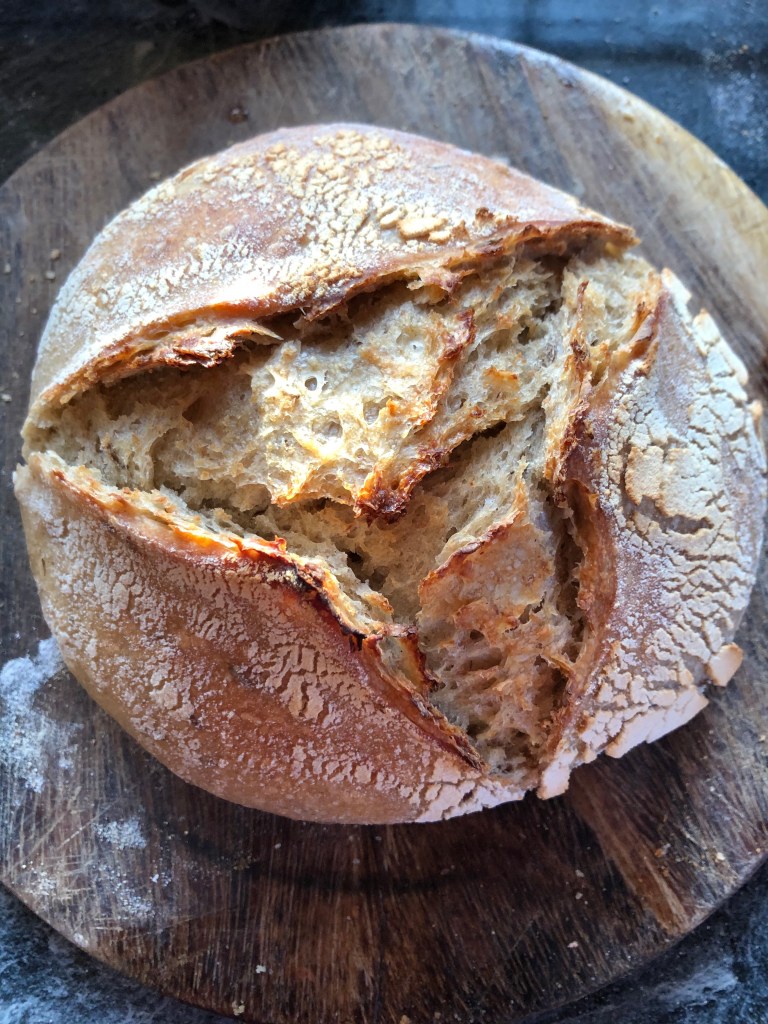
Pizza sourdough

Best pizza ever….

This dough is very versatile. You could make za’atar manakish, Italian flatbreads, focaccia or pizza with it. It makes the most crisp, delicious pizza base I’ve ever made, using just ordinary bread flour. I use Marriage’s organic flour. There are specialist pizza flours out there which I’ve tried, but this recipe has produced the best results for me as long as you use liberal amounts of polenta or rice flour on the parchment before rolling out the dough. It is this that allows the base to crisp in an ordinary domestic fan oven, as well as heating the baking tray before you put the pizza/parchment on it. The dough has a very high hydration and is shaped best after retarding.

Levain

20g starter

25g water

25g white Marriage’s organic bread flour

8g sugar

Dough

use 63g of the levain. Mix it with:

525g Marriages organic white bread flour

369g Water (35 degrees)

65g olive oil

Salt 11g

Sugar 7g.

Mix in a stand mixer for 5 mins. Leave to bulk ferment for 4 hours in a warm room. Dough temp remaining between 22-26 degrees.

This dough will then refrigerate at 3-4 degrees quite happily for for up to 4 days before you wish to use it.

However, after 3 hours resting in the fridge, you can then divide the dough into four 250g balls. You can do this by shaping the dough, tucking dough under its bottom on the work surface until you get it into a round shape. Leave the balls to rest for up to an hour, depending on the warmth of your kitchen.

Take 4 parchment sheets and sprinkle with fine polenta or rice flour. Make a pizza shape with oiled hands, gently pushing it into the shape. Make it fairly thin for an authentic Italian thin crust, leaving the edges slightly thicker, so the filling doesn’t run over the sides.

Filling

Carton of tomato passata

2 garlic cloves

Olive oil 2 tablespoons

Oregano or fennel seeds to taste

Tiny pinch of chilli flakes

Salt and pepper

Simmer on low heat until thickened. cool.

Spread evenly across the 4 pizza.

Cheese on top and toppings of your choice. bake at 250 degrees for approximately 15 mins on a heated baking tray. Slide the pizza on the tray carefully, or if your baking trays have sides, keep the parchment taught and quickly move the pizza to the tray (two people needed for this). Check the bottoms are light brown and baked before taking out of oven.

This dough can also be used as foccacia. Oil a 20 x 20cm square tin with olive oil. Tip refrigerated dough into tin. Push the dough gently to the sides and even the dough across the tin as it relaxes. Don’t force it when it’s cold. Leave in a warm room for approximately 2 hours until bubbly and wobbles when you shake the tin. Push your fingers in to the dough to form the customary foccacia dimples. Sprinkle with flaked salt. Bake for approximately 25 mins at 220 degrees.

Featured

Khorasan and Linseed sourdough

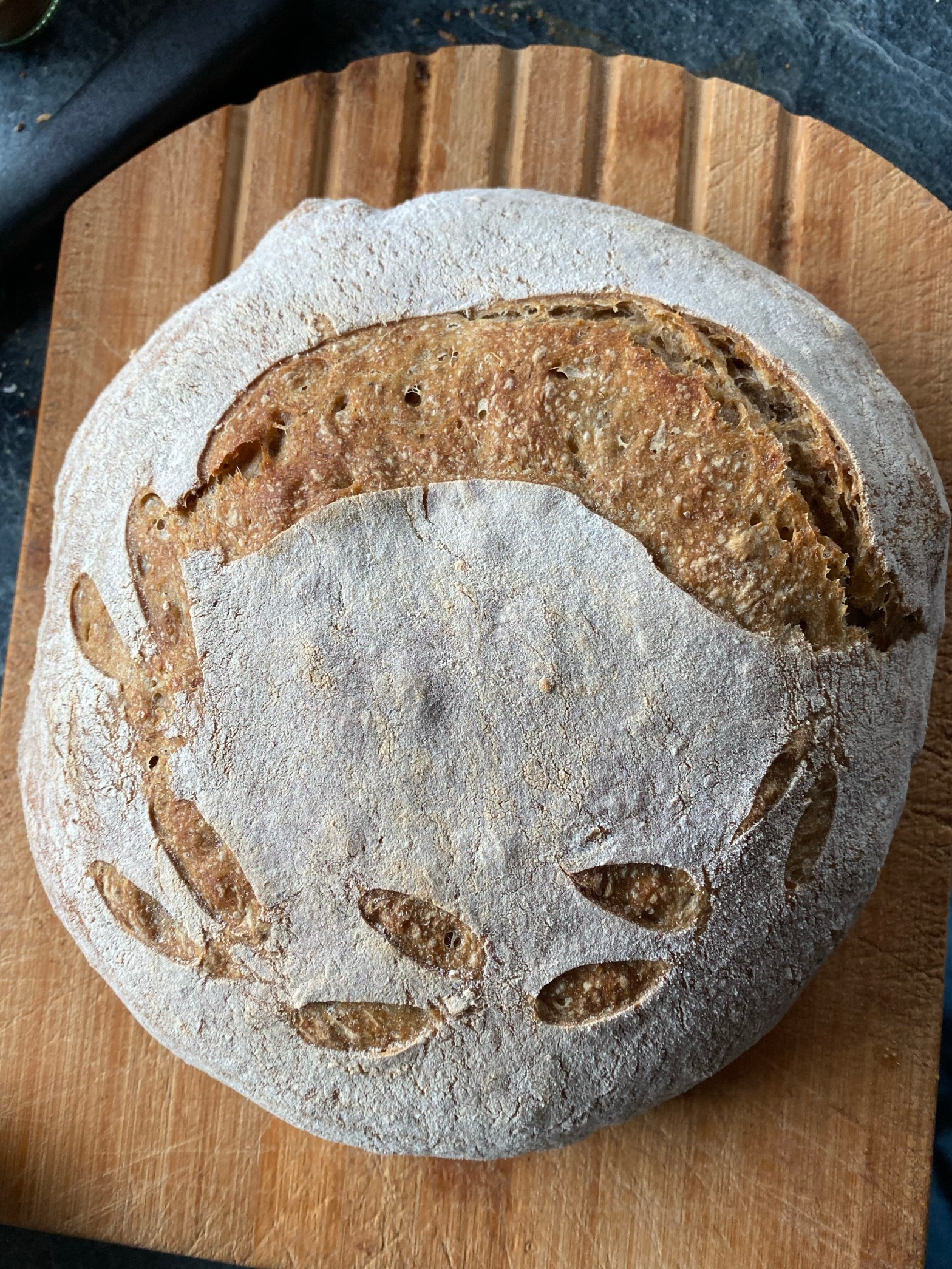
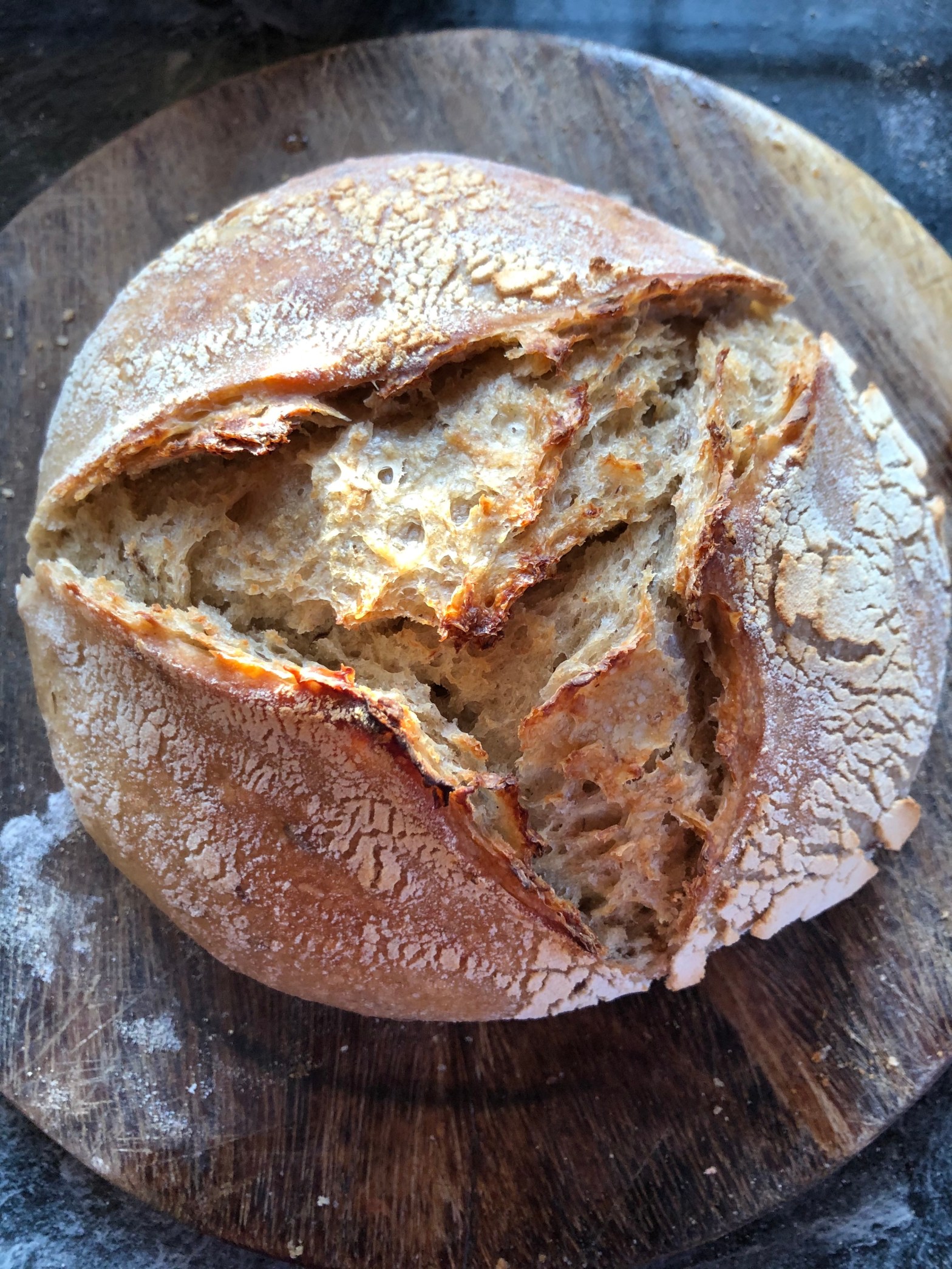
This is my Gold award winning recipe. I used a stone baked artisan oven, but you can create this at home in a domestic oven. White spelt is extraordinary to work with as an artisan flour. Creamy and light, offering a fantastically pleasing oven spring. I use brown linseed as it is the type grown here in Scotland (mungoswell mill). However, you can use golden flax if you wish.

30g dark rye starter

180g warm water

250g white spelt

50g Khorasan

25g brown linseed

5g salt

For a loaf to be baked first thing in the morning:

1. 3pm. Mix starter, water, flour, linseed and salt by hand with a spoon in a glass bowl. Mix until all ingredients fully incorporated. The water should be 30c when it goes into the dough. This is a shaggy dough and will not look like a smooth dough.

2. Leave dough to rest for half hour. At 3.40 stretch and fold, then stretch and fold twice more at half hourly intervals.

3. Leave to bulk ferment somewhere warm until you can see air in the dough through the glass, approx 5 hours from when dough was made. It should have risen by a third.

4. Shape and transfer to a 500g round banneton. Refrigerate overnight. No need to cover it.

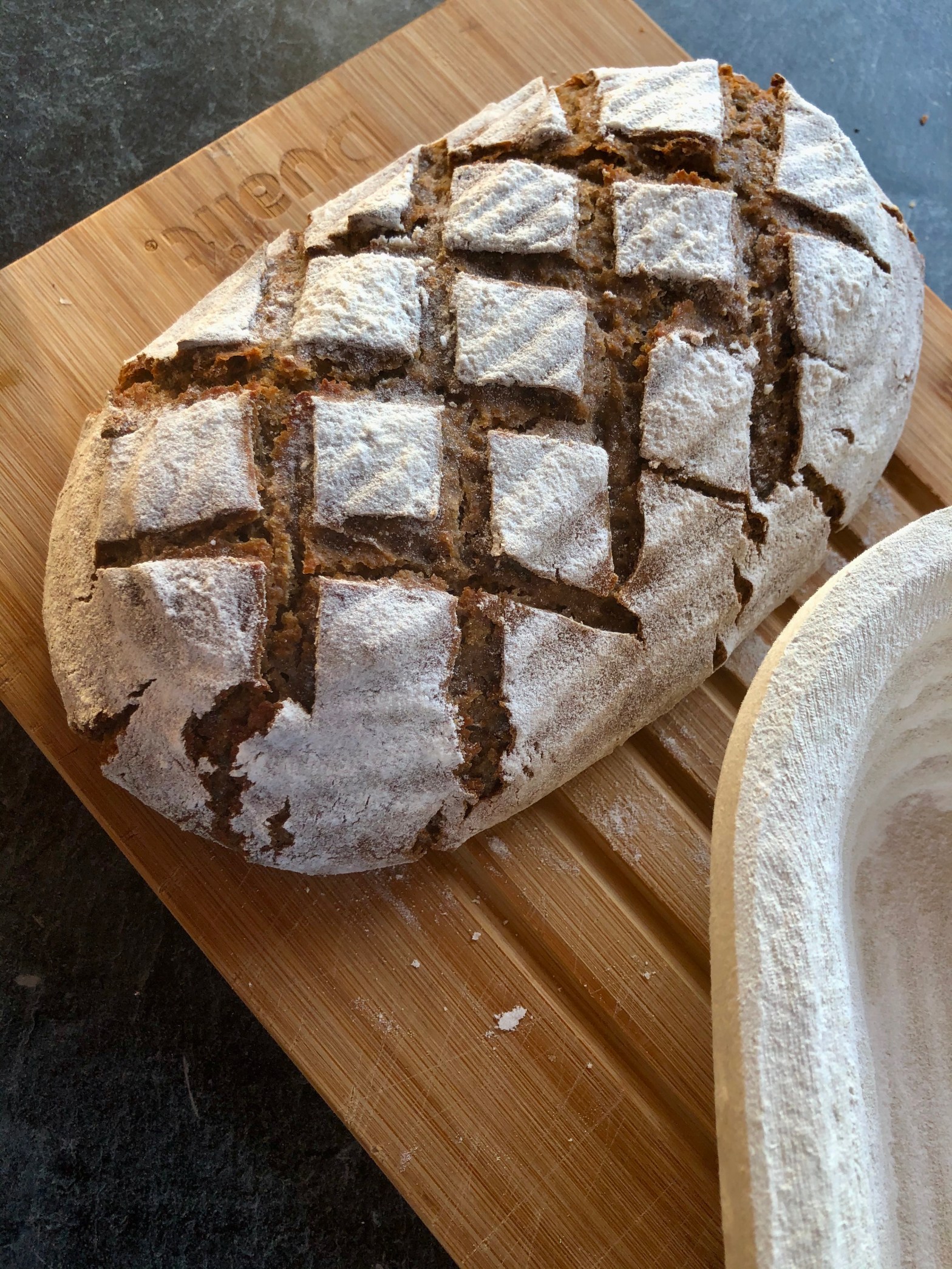
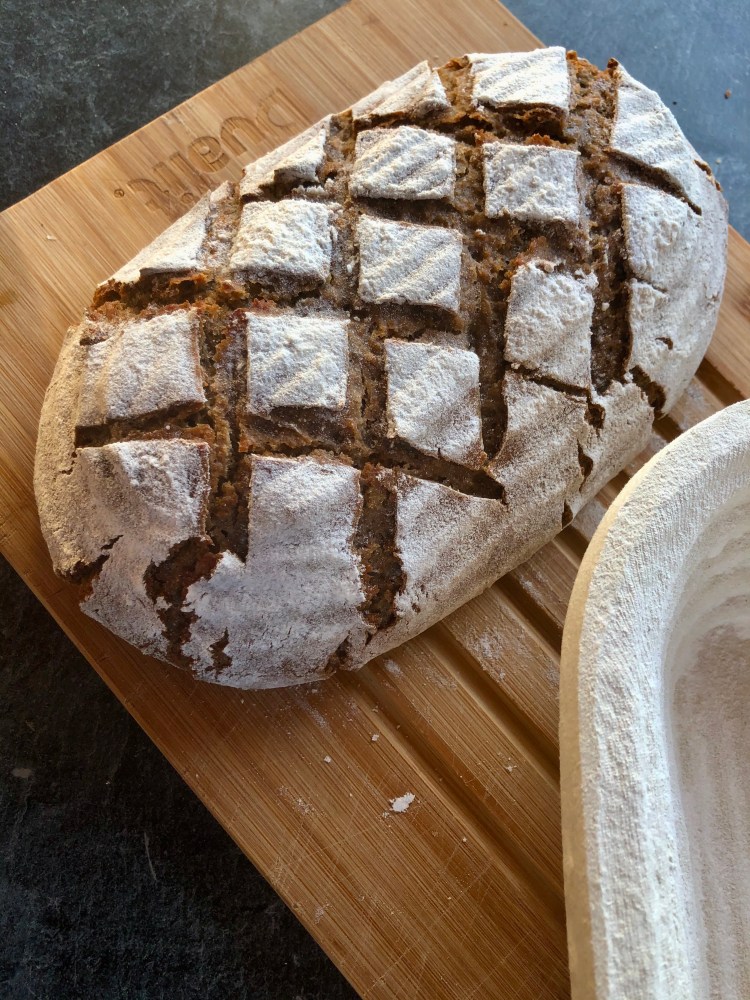
5. In the morning, turn the dough out into a casserole dish. Score in the shape of a Y. Turn the oven to 220c. No need to preheat. Take lid off after approx 30 mins. Check that the loaf has fully blossomed into a beautiful crown and leave uncovered to brown for 10 mins. If the loaf appears to be still in the process of rising, put the lid back on for 10 mins before browning off. The internal temp of loaf should be 99c when fully baked.

Featured

Tiptree World Bread Award

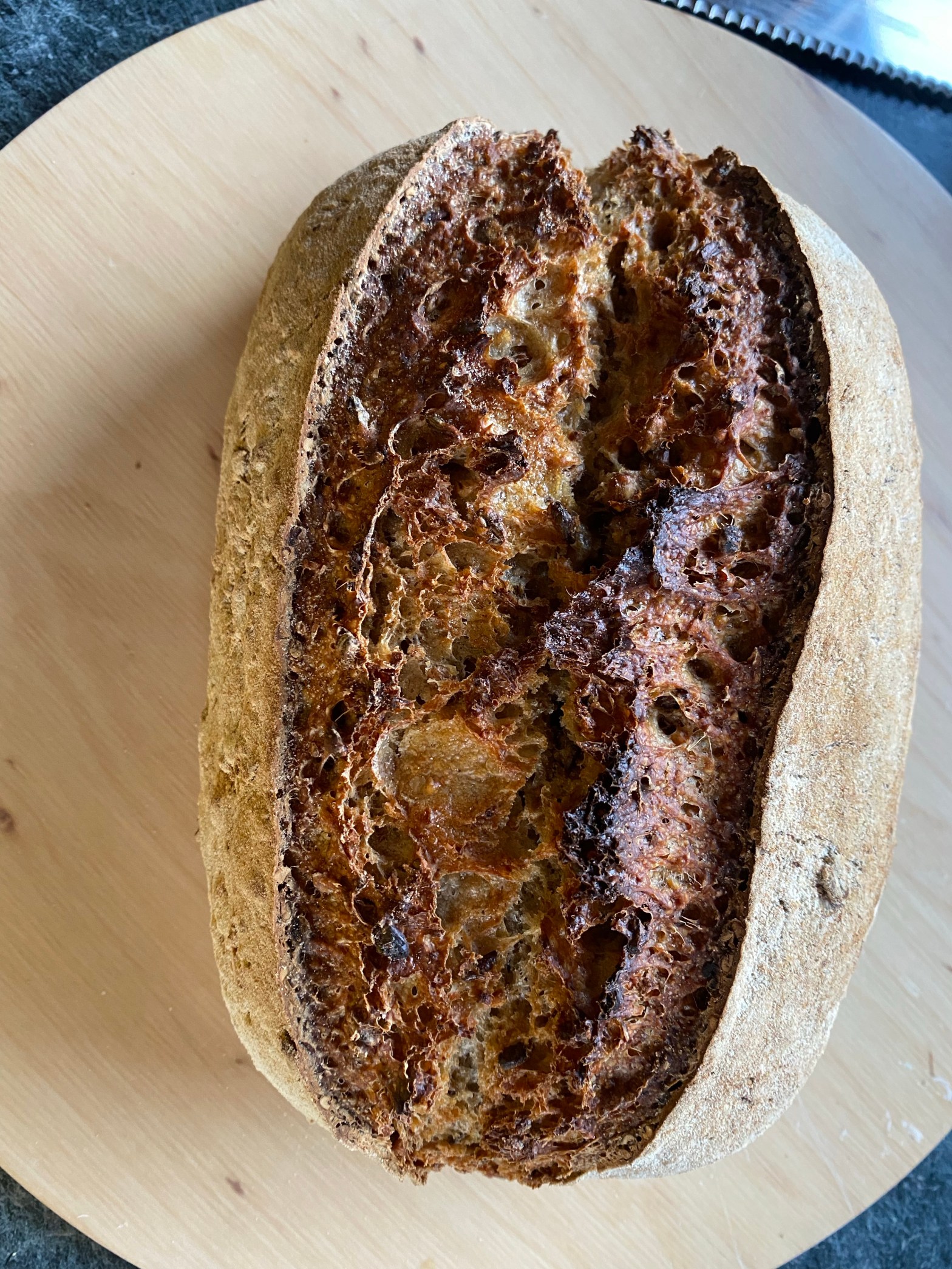
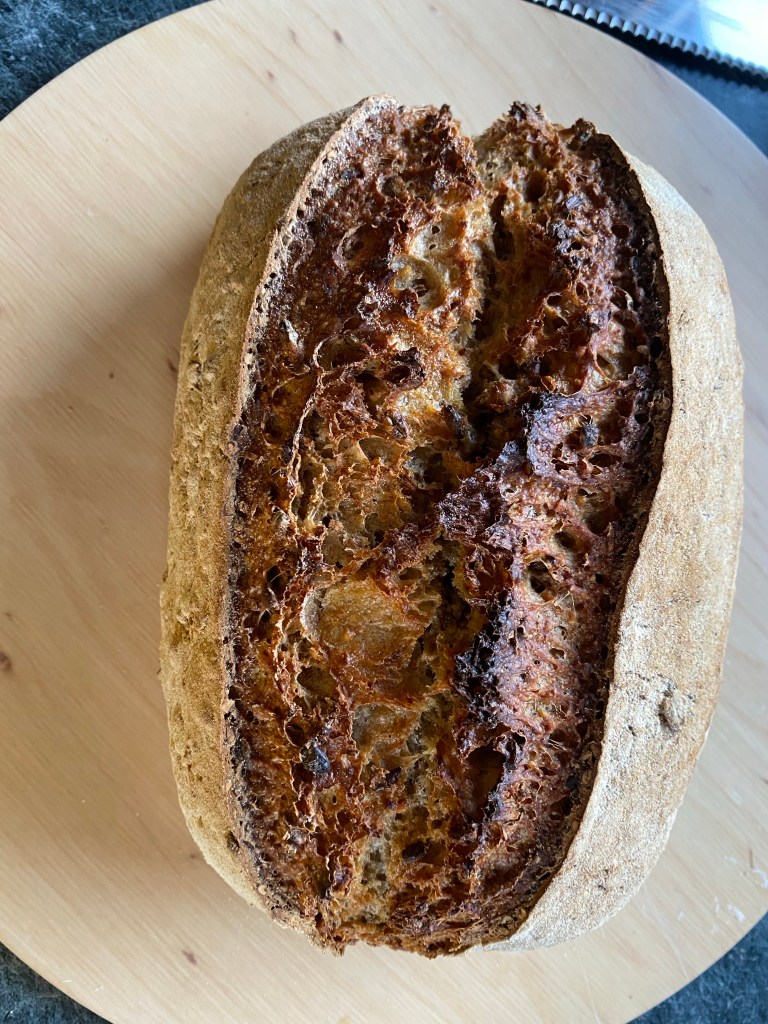
Heritage Bakehouse is pleased to announce a Silver and Bronze award with two sourdough recipes. The silver award for the nuttimalt has a special story. My parents used to buy bread to sell from a bakery in Bournemouth. One of their loaves was a nuttimalt. I have recreated it from memory. A wonderful loaf that I have never found anywhere since. Ernie Tanner was an exceptional baker of his time. Sadly no longer with us. Determined to do him justice, I practiced the loaf many times until I got close to the taste of the loaf I remembered. Whilst his loaf was a yeasted loaf, and the slightly lighter crumb than mime, it was the taste I was after. A sweet chewy crumb, with malted flakes, and of course nuttimalt.

Featured

Why should we eat organic sourdough instead of mass produced bread?

The rise in artisan bread production across the country is only 5% of the bread market share, but growing all of the time. Health of the nation has been suffering. Bloating, pain, intolerance to modern wheat yeasted bread has been around for many years forcing some to become gluten free. Many have taken matters into their own hands. Some have started growing heritage grain wheats. Others have started baking with those heritage grains.

Did you know that all non organic wheat is sprayed with a known carcinogen ‘Roundup’. Many of us have been campaigning for the ban on this chemical. However it’s use is continued with reassurance from the manufacturer that as long as the wheat is sprayed two weeks before it is harvested, that the chemical is broken down. However studies show that lots of wheat tested have residual traces in the grain. Why are we putting weed killer on our crop I hear you ask. The whole wheat plant is killed before harvest, in order that it dries out and the bounty (seed) is more easily harvested. Farmers control the harvesting by deciding when the plant should die and dry out and not have to wait for the nature to do the job. How crazy is that? Who would have thought spraying something we eat deliberately with a petrochemical weed killer would be a good idea?

Sourdough is a naturally fermented product. Just flour and water create a leaven which make bread rise. Yeast is just one fungi strain of this leaven, identified as being ‘the one’ that gives consistent rise in less time. It is extracted and used in commercial bread making. However, this process forces the dough to prove quicker. Slow fermentation of sourdough is the key to good digestion of wheat. Many people find eating sourdough does not give digestive symptoms such as bloating, discomfort and loose stools.

For a more in depth look at this topic, Restoring Heritage Grains by Eli Rogosa is a fabulous insight into our forefathers knowledge of grain.

Featured

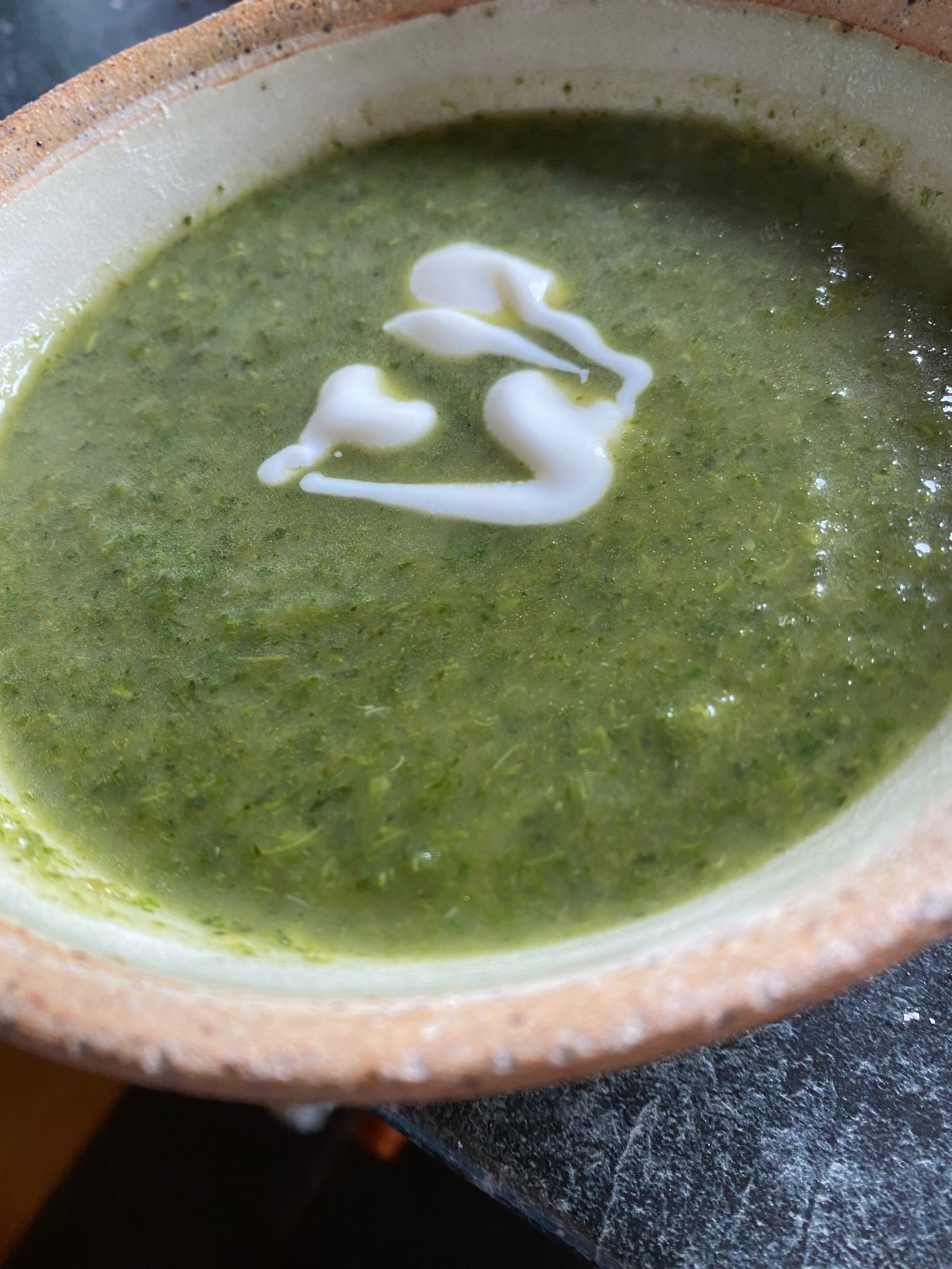
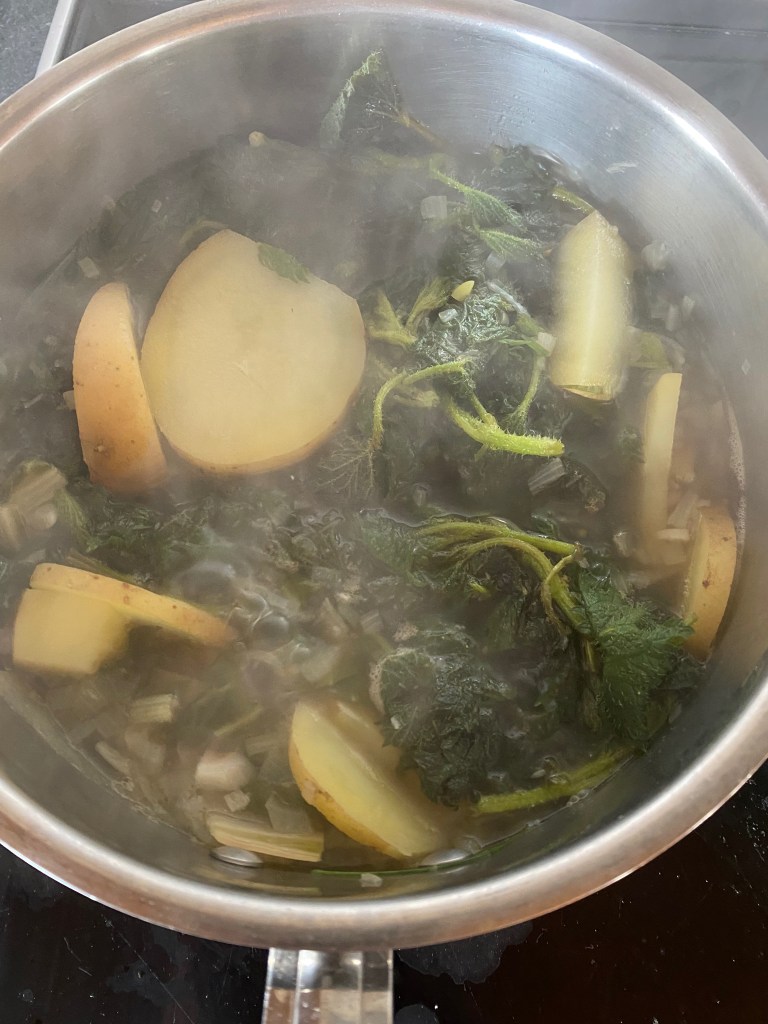
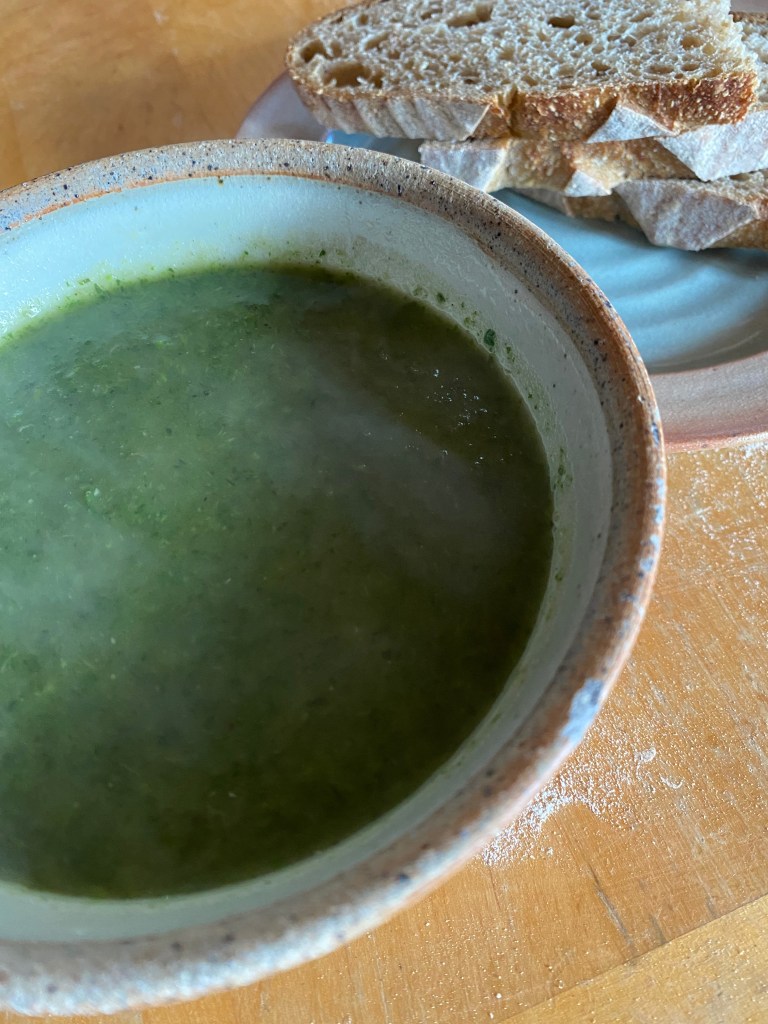
Nettle and Chard Garden Soup

What to have for lunch today from my permaculture garden?

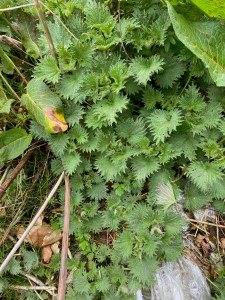
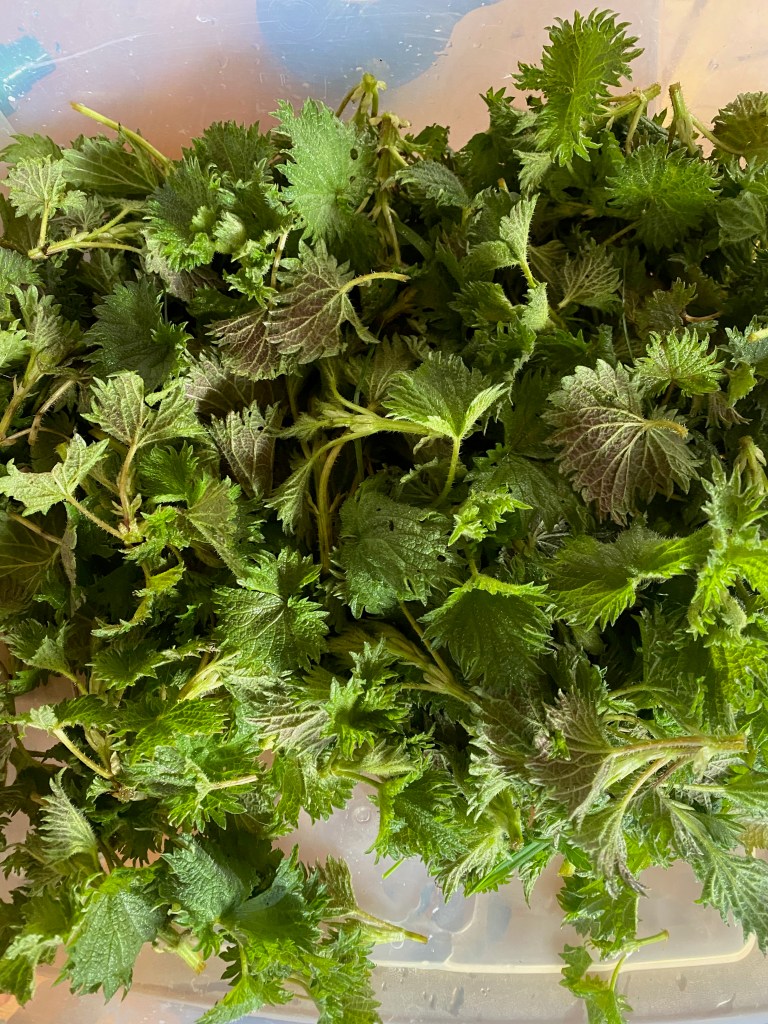
4 large handfuls of nettles

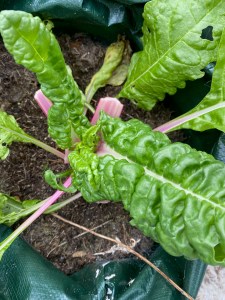
4 large Chard leaves

2 large potatoes sliced thinly

2 vegetable stock cubes

3 garlic cloves

2 tablespoons of chopped dill

Salt and pepper to taste

  • With rubber or latex gloves, wash and rinse stinging nettle and chard.
  • Chop the chard.
  • Heat oil in a large saucepan over medium heat.
  • Add onion to pan and cook until starting to soften, about 2 minutes.
  • Add garlic and potatoes to pan, cook for 5 minutes over medium heat stirring every minute or so until potatoes begin to stick.
  • Add nettles and chard to pan.
  • Add stock to pan, bring to boil and then simmer for 10 minutes until potatoes and nettle stems are soft.
  • Remove from heat.
  • Use a hand blender to puree all ingredients into a smooth soup.
  • Add salt and pepper to taste.
  • Add chopped dill.
  • Serve with goats yogurt and sourdough.

Featured

Beetroot apple and caraway soup

Ingredients

  • Olive oil for frying
  • Bunch of beetroot
  • medium onion
  • 2 eating apples
  • vegetable stock cube
  • 1 tsp caraway seeds
  • Salt and pepper to season
  • natural yogurt for dolloping on the top.

Peel the beetroot and chop into cubes. Core and slice the apples. There is no need to peel them. Dice onion and fry until softened. Throw in the beetroot and apple. Add the caraway seed. Pour in enough boiling water to just cover the veg and crumble the stock cube into it. Simmer for 15 mins or so until the beetroot is soft enough to get a knife in it. Blend with a handheld food blender. Serve with a spoonful of natural yogurt.

Featured

Why is sourdough better for health?

Fermentation

Wild yeast are single-celled fungi that exist all around us. They feed on carbohydrates, and as they do so they release carbon dioxide, B vitamins, and alcohol. Because they release carbon dioxide, yeast can leaven bread, and because they convert carbohydrates to alcohol, brewers use yeast to make beer and wine, too. This is the fermentation process.

Although the beneficial wild yeast in the sourdough tend to be lost during the baking process, the fibre and plant compounds, called polyphenols, become more bio-available. These act as an important fuel source for our gut microbes, which makes sourdough bread a gut-friendly choice

Fermentation of food grains also improves bioavailability of minerals. Phytic acid is present in cereals bonded with iron, zinc, calcium and proteins. This bonding makes it difficult for the body to utilise the minerals in flour. The enzymatic degradation of phytic acid requires an optimum pH which can be provided by natural fermentation. Such a degradation of phytic acid can increase the amount of soluble iron, zinc and calcium absorbed by the gut. (Gupta, Gangolya and Singh 2015)

The fermentation process and higher fibre content makes sourdough a useful option for those with blood sugar management issues. This is because, unlike many commercially produced breads, sourdough has less of an impact on blood sugar levels. This especially true of rye sourdough.

Typically, diets high in fibre are associated with a lower risk of heart disease. Sourdough appears to offer additional benefits thanks to the fermentation process; these benefits appear enhanced when wholegrain rye flour is used. All Heritage Bakehouse sourdough has whole rye in it.

Traditional sourdough undergoes a slow fermentation process, . This process starts the breakdown of protein (including gluten), making sourdough easier to digest.

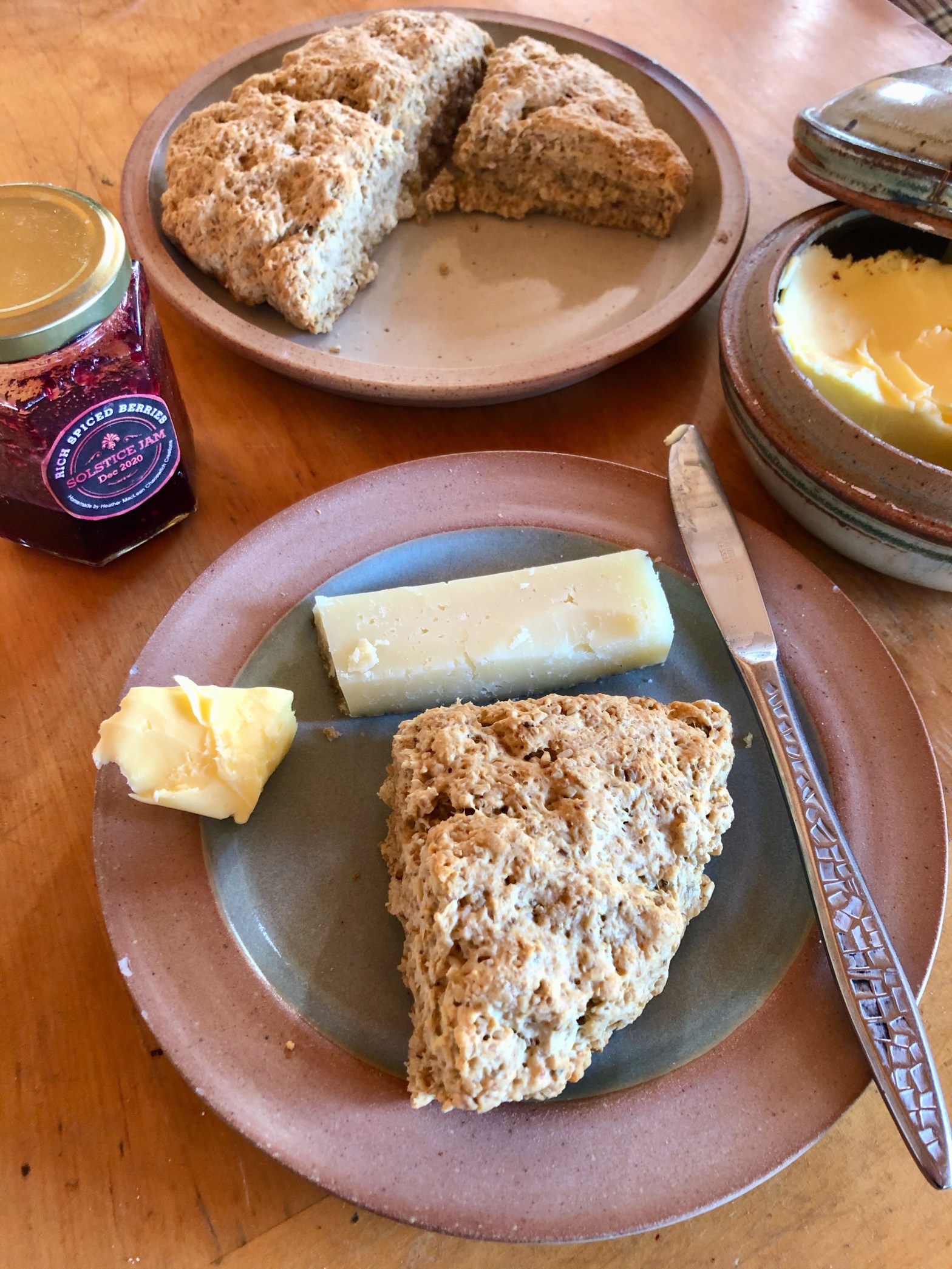
Scottish Bannocks

  • 100 g plain flour
  • 65g beremeal
  •  2 tsp bicarbonate of soda
  • 1/2 tsp cream of tartar
  • 1/4 tsp sugar
  • 1/4 tsp salt
  • 115 g medium oatmeal
  • 1 tbsp butter
  • buttermilk or natural yogurt as required

INSTRUCTIONS 

  • preheat oven to 180C if using and grease a baking tray
  • Sift the flour, bicarbonate of soda, cream of tartar, salt and sugar into a large bowl
  • Add the oatmeal and and beremeal and mix well and rub in the butter
  • Add as much of the buttermilk or plain yogurt as you require to form a dough
  • Turn dough out on to a lightly floured surface and knead briefly
  • Pat it into a round shape and press down till it is about 1cm thick all over and make a deep cross to form quarters
  • If baking place on prepared baking tray and into oven for approximately 15 minutes or until golden and a skewer comes out clean
  • If using the hob place your bannock either in a hot girdle/griddle or in a flying pan (or hotplate of Aga) and brown on underside the turn over and do the other side
  • cool on a wire rack